How and Why Should You Invest in a Forest?
More and more savers are looking to give meaning to their investments — combining financial performance with responsible investment. Forest investment achieves exactly this balance. It offers returns, stability, and a direct ecological contribution.
But what does forest investment truly involve? What are the benefits, the risks, and the options available? In short: how and why should you invest in a forest?
Investing in a Forest: What Does It Mean?
What does it mean to invest in a forest?
Investing in a forest means becoming the owner of a real, tangible, long-lasting asset. Unlike purely financial instruments disconnected from the real economy, forests have a physical and visible existence. They produce wood — a renewable resource — shelter biodiversity, and store carbon. All key strengths in a world facing climate challenges.
When an investor acquires a forest plot or shares in a forest investment vehicle, they actively contribute to the development, preservation, and responsible management of a renewable and essential natural resource — without sacrificing return potential.
Why Invest in a Forest?
Forest investment is experiencing strong momentum: around 100,000 hectares of forest are transferred between investors each year in France, representing more than 300 transactions for plots over 50 hectares.
While these figures may seem modest compared to traditional asset classes, forest investment offers clear advantages that explain its growing popularity. Three main benefits stand out:
- Forests are a stable asset
- Returns are regular and predictable
- It is a form of responsible investment
[[cta-nl]]
A Stable Asset Protected from Market Volatility
Wood prices evolve slowly and tend to be less sensitive to economic cycles compared to other asset classes. Even during crises, demand for wood products — construction, heating, pulp, packaging — remains strong and resilient. The global supply-demand tension in the post-Covid years is a good illustration.
Forests also hold their value over time and generally appreciate steadily. They act as a long-term, inflation-resistant asset and offer valuable diversification in a portfolio.
Regular and Predictable Returns
A major advantage of forest investing is its regular performance. Returns come mainly from wood sales and land appreciation.
Average returns stand around 2% per year, depending on the forest’s quality, tree species, and location.
This is not a short-term speculative investment. A 2% yield may appear modest, but it is stable, predictable, and low-volatility, making forests a smart diversification tool.
A Growing Market
Demand for wood — whether for construction or heating — is rising significantly. Studies indicate that demand for construction timber in France could increase by 29% to 49% by 2050.
Firewood consumption has also increased strongly, with +20% growth at the end of 2021.
A Responsible Investment
Owning a forest means contributing directly to environmental protection. Forests play a critical role in climate mitigation: they capture CO₂, filter particles, protect soils, and host rich biodiversity.
For many investors, integrating these environmental aspects is now essential — forest investment aligns perfectly with this mindset.
[[cta-guide2]]
How to Invest in a Forest? Available Options
There are several ways to invest:
- Direct ownership
- Forest Land Group (GFF)
- Forest Investment Group (GFI)
- Forest Savings Companies (SEF)
- Forest SCPI and green funds
Direct Forest Ownership
Buying a forest outright suits investors seeking full ownership of a concrete, durable asset.
Advantages:
Total control of the land: choice of plots, forestry strategy, species selection, and long-term planning.
Challenges:
This requires real commitment and technical knowledge. Professional support (forest experts, notaries, managers) is highly recommended.
Limitations:
- High entry cost — often tens or hundreds of thousands of euros
- Limited liquidity
- Management costs (maintenance, forestry operations)
Forest Land Group (GFF)
For investors who want forest exposure without managing plots directly, the GFF is an attractive solution.
You purchase shares in a civil company whose purpose is to acquire and manage forests. Professionals handle sustainable management, and you receive a share of revenues.
Tax benefits include:
- Income tax reduction: 18–25% of the amount invested (capped at €6,250 for singles and €12,500 for couples)
- IFI exemption: 100% (unlike direct land ownership)
- Inheritance rights: 75% exemption on forest assets
Other advantages:
- Lower entry ticket (a few thousand euros)
- Risk diversification across multiple forests
Forest Investment Groups (GFI)
Created in 2009 and approved by the AMF, GFIs operate similarly to GFFs but with a more pronounced financial structure.
They provide access to the forestry sector with delegated management and tax benefits.
They are ideal for investors seeking a diversified, regulated, long-term investment that supports the French forestry ecosystem.
Forest Savings Companies (SEF)
SEFs are collective investment vehicles dedicated to acquiring and managing forests under sustainable management plans. Their mission is to make forestry investment accessible to a broader public.
Tax benefit:
15% income tax reduction (capped at €9,500 for singles and €19,000 for couples).
Forest SCPI and Green Funds
Forest SCPIs operate like real-estate SCPIs but invest exclusively in sustainably managed forests. Investors receive part of the income from timber sales.
Typical returns range from 1% to 2% annually, with total simplicity (no management responsibilities).
Environmental funds focusing on forestry or reforestation offer an alternative for investors wanting exposure to the wood sector without owning land directly.
Note: Species selection is strategic — conifers (Douglas, spruce, pine) grow faster and generate regular revenue, while hardwoods (oak, beech, ash) offer higher long-term value. A mix helps diversify and mitigate climate risks.
[[cta-impact]]
Summary Table: Ways to Invest in a Forest
Expected Profitability
Returns depend on:
- Location
- Species (oak, beech, pine, Douglas)
- Forestry management
- Climate conditions
Average long-term total performance (timber revenues + land value) typically ranges from 1.5% to 2%, up to 4%.
Tax Benefits
France offers very favorable tax treatment to encourage sustainable forest management.
1. Income Tax Reduction (IR)
- 18% to 25% of the amount invested
- Capped: €6,250 (single) / €12,500 (couple)
- Minimum holding: 8 years
- Eligible assets: GFF, GFI, SEF
2. IFI Exemption
- 75% exemption
- Requires a 30-year sustainable management plan
3. Inheritance and Gift Tax Exemption
- 75% exemption
- Same sustainable management requirements
4. Capital Gains
- Real-estate capital gains regime
- Full exemption after 22 years (income tax) / 30 years (social contributions)
Summary of Tax Advantages
Risks to Be Aware Of
Although forest investment remains a relatively safe asset class, it does involve specific risks. Here are the main ones to understand before getting started:
- Natural risks: storms, droughts, fires, pests, and diseases
- Wood-price fluctuations: depending on global demand and the species harvested
- Limited liquidity: selling a plot or shares in a forestry group can take time
- Long investment horizon: value creation unfolds over several decades
Investing in Forests… and in Carbon
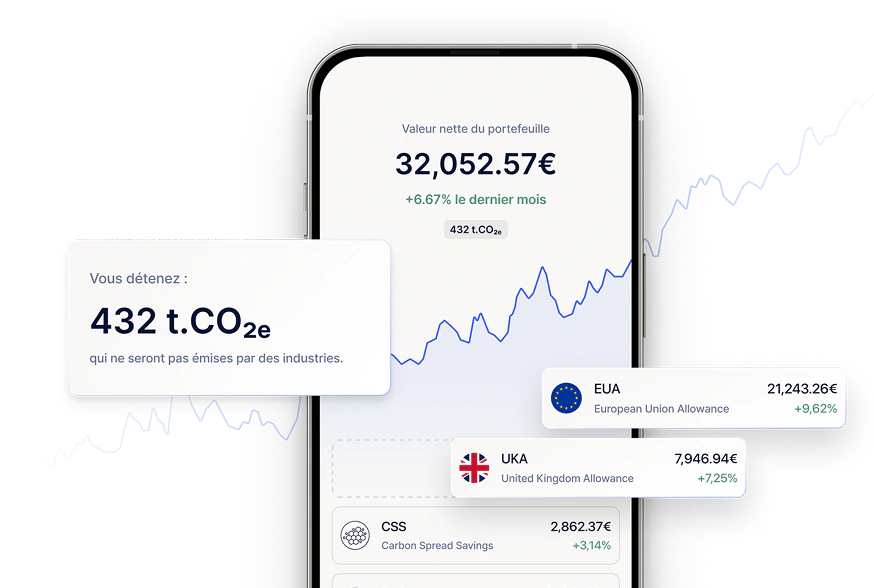
A forest is not only a natural asset — it also plays a central role in the carbon market.
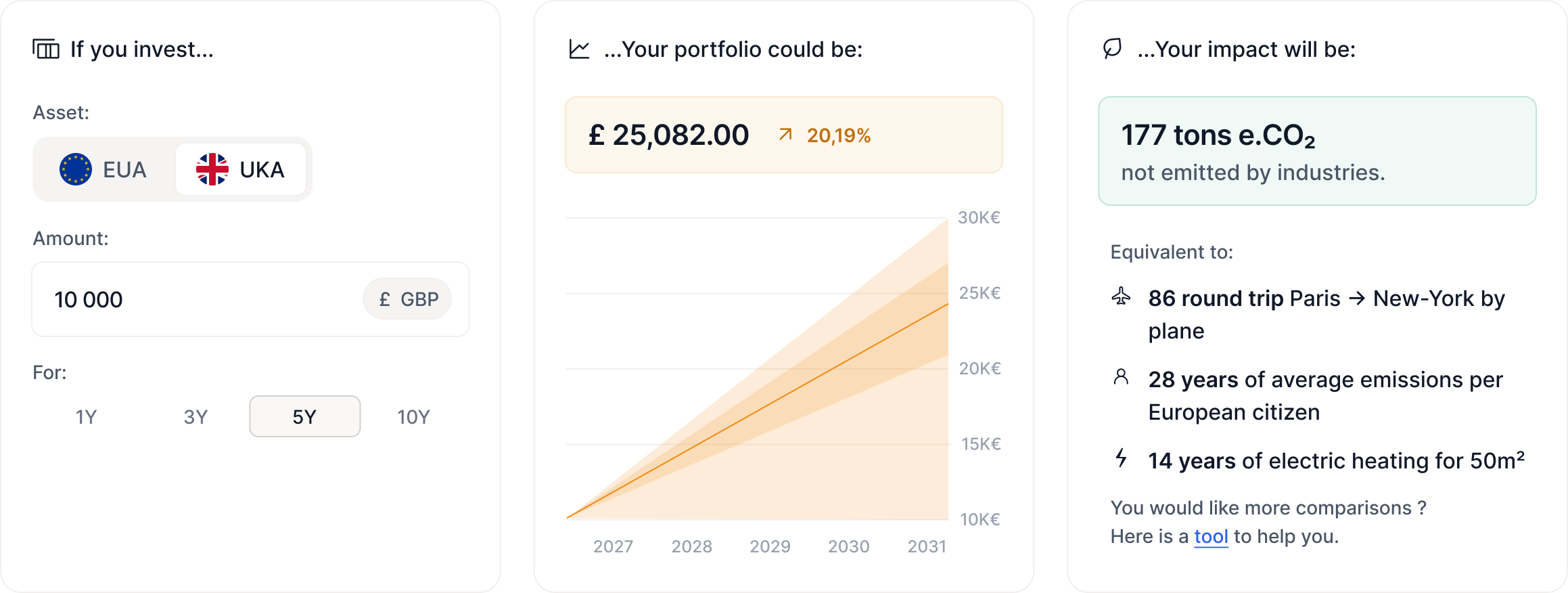
This is why some investors now choose to diversify their sustainable strategy by investing in reforestation projects or in the regulated carbon allowance markets.
[[cta-simulateur]]
Conclusion
Investing in a forest allows you to combine economic strategy with environmental commitment. This asset class offers moderate but stable returns, attractive tax incentives, and a meaningful contribution to the ecological transition.